
AMES, Iowa – The Iowa Department of Agriculture and Land Stewardship has confirmed a case of Theileriosis, caused by Theileria orientalis Ikeda, in a herd of cattle in southeast Iowa for the first time.
Theileria is a protozoan parasite that infects red and white blood cells, leading to anemia and, in some cases, death. The parasite is carried by Asian Longhorned Ticks (ALHT), which have recently been identified in Iowa for the first time. Although the tick will be active all summer, it is common to see a surge of infestations when cattle are first introduced into a new pasture. The presence of a preferred host generates a surge in new ticks, as females will begin to lay thousands of eggs.
Cattle producers should closely observe cattle on pasture regularly for signs of tick infestation (especially in Southern Iowa; although, expect the tick to spread north this summer), particularly since many cows have been turned out to pasture recently.
Typically, cattle affected by Theileriosis will show signs of lethargy, anemia and difficulty breathing. They may develop ventral edema, exercise intolerance, jaundice and abortions. Although signs of Theileriosis are similar to anaplasmosis, younger animals and calves often display more severe signs compared to mature cows and bulls. Due to anemia from both tick infestation and Theileria, the risk of death can be elevated. If cattle producers suspect either Theileria or ALHT, have a veterinarian collect appropriate samples and submit them to the Iowa State University Veterinary Diagnostic Lab.
Cattle producers should aggressively control external parasites this summer. Insecticide ear tags alone are not enough to control ticks. Consider incorporating a backrubber or regularly applying a pour-on during the summer. Pyrethroid-based products are also available that include a tick control label. If an increase in tick infestations is observed, an avermectin pour-on may be the best intervention.
Although Theileria and ALHT can be detrimental to cattle and other ungulates, there is no health risk for humans.
For more information, review guidance from the Iowa Department of Agriculture and Land Stewardship.
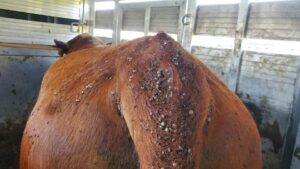
Photo credit: Dr. Dan Goehl

(contributed press release and photo, ISUANR Photo Dr. Dan Goehl)
About the Author