Black-capped Chickadee
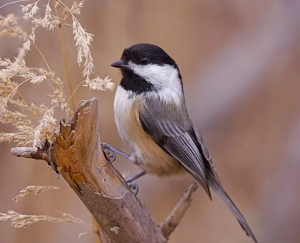
Karl Jungbluth visits about the Christmas Bird Count for Boone County, held January 3rd. He talked about the results of the count, how it’s conducted, how people can participate and more. He said 62 species were identified, the third highest species total. He also noted the Black-capped Chickadee this count was the lowest number ever noted.
Transcript
On our program today we are visiting with Carl Youngblith. Carl is, well, retired. That's right. Sort of retired. But Carl, I think when I first met him, busy working with the weather service.
And most recently just volunteering a lot of time with like friends of the ledges, working the ledges and doing a lot of other things like the Boone County Christmas Bird Count and he sent us information about that. The count was held earlier this year.
So first, thanks for taking some time to come and visit with us. Sure. It's nice to be here and nice to be retired. So weather is my hobby now like everybody else's. We keep doing it. Let's talk a little bit about Boone County Christmas Bird. 40th year this has been done.
And I can remember hearing reports of it many years ago. But then it kind of went away. I didn't hear much about it. Then all of a sudden you sent out this information. I thought, oh, it's still around. Still going strong. Over 10,000 birds identified this year.
So tell us a little bit about the makeup. How does this come up? Is this, is it Audubon Society or how does it come together? Yeah.
The National Audubon Society, they call themselves Audubon now, but they coordinate Christmas Bird Counts and they're all over the Western Hemisphere nowadays. It used to be started out in 1900.
So 126 years ago, a few people decided that shooting birds is something to do on Christmas Day after dinner was not a good thing. And so they started the first counts. So that was 126 years ago.
So these counts have been building up in number all through time and the data goes to National Audubon Society and every count is a circle, a 15 mile diameter circle.
And the way it's conducted is standardized so they can keep the data and compare it through the decades now and help us a little bit to understand how bird trends are going and things like that. Okay.
So is our base, is it just like Boone or is it from where, where is our Boone County 15 mile radius at? Yeah, the center of the count I think is like the south end of McCose Park or something like that. Okay.
So it catches the Y camp to the north and the Arboretum's in there, the Ledges and all the way down the Arboretum's in there. So that kind of gives it in far out into the eastern, more east of town where it's more just farmland. Sure.
So a variety of habitats, kind of the best we can get around Boone. And how do you do this? It's a one day count, right? Right. It's a 24 hour count and there's a coordinator. So we've had other coordinators in the past and it was my turn. So I started this year.
So 40 years now we've been doing a Boone County count and so we coordinate teams. So there's nine areas, the circle is divided up into nine areas and each area has a team leader and they put together their birders to go along with them. So they go everywhere they want to go.
It's up to them. And you're counting species you see plus the number of each species. So you're keeping a list the entire day. And then there's also stationary bird watchers who we call them feeder watchers who typically are at their home watching their bird feeders.
Counting birds there too. So some have better bird feeding operations than others. Location and location and location. It's all about location and too. And again different, you get into some of the timbered area that I mean I know that there's a lot of varieties in there.
Yeah, it varies of course. So we also keep track of where you're at so the teams are out on foot. I forget how many miles were logged this year. Something like 30, 40 miles of people hiking to look for birds and then people driving around looking for birds too.
So yeah in the woods you're going to see the woodpeckers of course. This was a great year for the big pileated woodpeckers, the giant ones. So they're doing very well. And we had a lot of eagles. You had a lot of eagles.
Over a hundred eagles and it's hard to actually count the eagles accurately because when they're soaring down the river and you got one team on one side of the river, one team on the other side, how do you know if they counted the same bird?
They probably did so we kind of use a formula on that. So yeah, I mean you understand that occasionally birds are going to be moving and we look for that too. So this year you had a lot. I mean your numbers were pretty good. But our weather was also pretty good for it too.
Yeah, so the count is weather dependent not just on count day but the season. If you've got a lot of snow cover and that type of thing it affects bird behavior where they can feed.
This year we had virtually no snow but it was below freezing so we could hike wherever we wanted because it was kind of like good footing. You weren't sliding around, falling down, getting worn out in the snow. And that affects the birds too.
Sometimes if the birds, if it's bare ground they can feed better. They can find seeds and stuff easier. And there's a handful of birds like Lapland longspurs and horn larks and snow buntings that maybe you've never even heard or seen.
And they are out in the farm fields a lot of times and if it gets bad and nasty weather they kind of come to the roadsides where it's kind of been cleared a little bit. It's a nice day like we had this year. You saw zero.
Nobody saw one of them because they either weren't out there or they were way out there and they blend in with the dirt. Sure, out in the fields and yeah, you weren't hiking out there. Talk a little bit about some of the highlights from this.
Over 10,000, basically the groups that you had working for you, almost 10,700. Yeah, so it's a lot of birds and the birds that kind of get in flocks are the ones you see the most of.
So the European Starling they're called, the blackbirds that are in town, they were the most common by far, over 5,000 of them. So they come in big flocks and in the winter time they eat a lot of cedar berries off the cedar trees actually.
So there was a good year for that so you had a lot of them. You had quite a few bluebirds and robins because they eat the same things. They depend on cedar berries. And so you know, just the numbers add up after a while.
So just so people know, from your groups that were out, you had just over 40 people, right? Yeah. So actually that makes the Boone County Count one of the most popular Christmas bird counts in Iowa because that's a lot of people to help out.
Some counts for whatever reason population around where they do the count, they have a lot less people so we have a lot. That makes it fun because many of these people have been doing it for literally 40 years. And they're pretty hardcore about this. They know their stuff, yep.
And they know where to go. So let's talk a little bit about, again you talk about the pileated woodpeckers. Again they are big. We see them down at the ledges, I know that.
Someone had a picture posted on social media not too long ago of one down there but there's a number of them around. Yeah and they're a river bottom species really.
They like mature forests and river bottoms so obviously with the Des Moines River going right through the middle of the count we have a lot of them. They also like to feed on dead trees and fallen trees so you think of the past five years what have we had? Derechoa?
Derechoa, knock down trees. Emerald ash borer has come through so a lot of these big ash trees are falling down. They're on the ground and just the aging of our forests so there's a lot of that around and they love it. So good area for them too.
I think again we mentioned bald eagles, a lot of sightings for that too but basically what you saw was quite a bit. There were some you didn't see too many of and you had a couple of individual ones that are rather rare.
So if you only see one of something it's not a common bird or they aren't active at the time of day we're out there or whatever.
So we had a couple of owls that aren't real common, the short eared owl and the long eared owl they are a species that typically would migrate back northward during the warm season of the year and they come down here to winter. A few nests but not very many.
So they're just kind of like somebody happened to see one sitting on a post or the short eared owl kind of flies around more like a hawk over a grassy area so they're kind of out dusk and dawn type of thing. You had a red shouldered hawk.
Right that's another bottom land, river bottom type species that there's only a couple nests around here and we have trouble finding the nest even in the summer.
Okay well let's see above it you had a lot of things where you saw above average numbers you mentioned that I know in your report too but had some pretty low numbers on some things as well and again maybe the habitat had something to do with it I don't know.
Yeah the season, the one concerns me though is the chickadees which are very popular with feeder people and everybody knows who a chickadee is and their numbers it was the lowest number of them we ever seen on the Boone count in 40 years only 129 picked up by 42 people out there and they're out in the woods and near the woods and so we don't know why that is but the numbers are definitely down and my feeders are down on the north end of Ledges State Park and we share a lot of birds with them and there's years when we've got 20 chickadees in our yard and this year it's just two or three or four so we don't know what's the reason for that.
So we'll see what happens can they come back. Right. Again these are the kinds of things when you see increases and decreases in numbers especially like that. Yeah. Have they been lowering over the last couple of years or again is this new numbers?
Yeah there's a the chickadees specifically I think the numbers have been a little going down a little bit and who knows why but then there's been scientific studies using Christmas Kurt bird count data and there's breeding bird surveys that happen in June.
All this is kind of scientifically put together so bird numbers have been declining pretty drastically in the past say since the Boone count started 40 years they're down maybe 30-40% in some species more than that. So we're seeing a decline. Habitat loss of habitat or?
Yeah a lot of it is that and potentially the weather reacting if the weather is changing we all think the weather has gotten crazy and you know if it's not consistent birds and insects and everything they depend on aren't you know have a little more trouble too and possibly pesticides chemicals that type of thing and you know just a lot of things have changed so the birds are still adapting and hopefully they'll level off but if they keep going down then reason to be worried.
So this is again first of all the our Christmas bird count was on June 30 we know when the date is for next year it's gonna be January 2nd. Right. So we call it a Christmas bird count but it's actually like a three-week period when you're allowed to do the count.
Okay and everybody I'm guessing does it the same time or do I mean all across the country everybody yeah so some like the Ames count is typically Saturday or two before Christmas type of time frame.
All right so now you mentioned you had 40 some people how do people get to the point that they're gonna be part of that going out there and looking do they have to be members of the society do they how do they how do you do that you said we've got some people that have been doing it probably for the 40 years.
Yeah so they probably helped start it out and but if you're kind of a learning bird watcher some people do come out on the Christmas bird count and kind of come along and learn some things but there probably are better opportunities to do that through the year the you know like legislative park and the arboretum we all do bird related programs through the year they're really good a lot of times it's a smaller group when you you got kind of personal attention helping you learn birds.
Sure. What kind is that over there?
But you know if you want to join up you can contact me through the big bluestem autobunt society would be the way to do it there's a contact form on their website and see if you search for that you can find out and then you can get on an email list and every time there's a field trip you'll get notified and you can go out there and pick up your knowledge because it's really like a lot of things we all know what a robin is and a cardinal and so then once you start there you can start building on that well is the bird bigger is it acting different you know and away you go.
Go from there so that learn how to do it now do they do are there other surveys throughout the year that are done also I mean this is just the one that right we're talking about right now the Christmas bird count but do we have other surveys that are done?
Yeah the big one is a breeding bird atlas which is a national breeding bird survey so that's on a protocol they call it where you go to specific points you listen and identify birds for three minutes and then you move to the next point so it's a really it's 25 points so it's a morning it starts like half hour before sunrise and very strict so that they know the way this bird the survey was conducted is the same over time and then the statistics there can show you trends as well.
Okay a lot of things keep track.
It is it is and once again I know that we you've done some programs again about birding and we've got I mean you've got the great spots around here along the high trestle trail conservation's got a bird bird blind down there they've got it out around Don Williams and obviously down at the legends a lot of opportunities so.
Yeah every fall there's a hawk watch on the high trestle trail.
That's it that that's pretty easy to go and just watch them come down the river pretty and we get that going too so there's a lot we've had a lot of people that are really good at it around here besides you there there's a number of people that have been doing this for a while especially through the DNR and stuff we've got a lot of well versed people that take more.
Right with the wildlife diversity program at the wildlife station there by the legends state park that that brings some expertise into our area and and you know one of those people like is Doug Harr who's retired from the DNR and there's another survey that we just completed here we started being called the bluebird survey and so that's what we still call it but that is checking on several species of birds so good news in bird world is the bluebirds we found on our surveys this year were record numbers way high like Doug saw 40 some the other day and I was just out my route is out west of Jefferson and I saw 32 so you know we had a great day for bluebirds and that's always good news because everybody loves the bluebird as well.
So and then we have those that we know that are gone for the I mean you know there are certain ones that go away for the winter time I'm thinking osprey in particular right uh but they'll come back in the spring and yes people robins are around here around all the time uh yeah but uh again depends what the weather's like if you're going to see them yeah and this year we had that big snow right after Thanksgiving and some of those birds that are late migrants native sparrows there's a lot of them some we still had around like white-throated sparrows are still here but other ones are in lower numbers so maybe they didn't get here in time all kinds of questions and things you can answer and think about watch we have so much there too best way to again for people to find out more about being a part of it would be start I'm thinking like you said bluestem out about society big bluestem is the prairie plant prairie grass autumn in society if you search that it pops right up okay you have some programs coming up that you are going to be involved with or um on bird birdie nothing nothing scheduled yet but I just did one at the arboretum okay that'll probably happen again periodically so just be on the lookout for those uh they're around that more than just you we have others oh yeah there's all kinds of people that love birds and I say I'm thinking about birds and watching birds and about every hour of every day so it's kind of amazing once you get into it I tell you what you're retired you got you got a task going here right now too uh the and again like you said uh the low numbers of chickadees again that's and I can pretty well recognize those there you know when I see them but yeah they are they are a lot lower and there's uh there's a quite quite a variety that people they look at it and they just know it's a bird right like the cardinal their numbers were kind of low too so but you know on these past couple days we think the weather is so horrible and we complain about it and oh we can't hardly tolerate this weather well the birds out there in that all the time and then the the weather warms up a little bit one day and the cardinal is singing already you know so it's february there you go yeah they're doing that um I was going to say oh for those that do have feeders and this is one thing I was told if you have a bird feeder and you start feeding them you keep feeding yeah you really should because the research says that they aren't dependent on the feeder for their life but it sure surely makes it easier especially in bad weather and the birds I think if you got woodpeckers coming to your feeder they're going to have a better family that year because sure they're in better shape they're not stressed out and kind of digging into their reserves to make it through a cold spell or something so it really helps all right Carl Young will have spent our guest on our program today we've been talking about our Boone County Christmas bird count next one coming up uh january of next year but uh and like you said uh saw some record numbers saw some concerning numbers as well too right people learn stuff all the time and lots of good people out there doing it all right I appreciate you taking time to come and visit with us and let us know what's going on thanks so much and uh you're welcome updated with more if you have more interesting bird things we'll do those too Carl Young will have the guest on our program today
About the Author