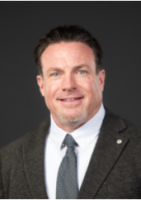
State Representative Chad Behn, (R) Boone
State Representative Chad Behn talks about the activity of the Iowa House up to this week’s legislative funnel. Behn talks about bills that have moved forward and his philosophy about moving bills out of committee do get to the House floor for debate. He’s not optimistic about a decision of eminent domain and the carbon pipeline legislation and feels there’s a lot of work yet to be done on property taxes.
Transcript
Well Chad, the legislature hit the funnel week this week and on the House side of it, you guys have been very busy. You see, I know both the House and the Senate, you get a lot of bills, but you have more people in the House.
You get a lot more bills out there and they get started and some of them make them out of committee, some don't, but the funnel is really the first deadline for it.
So really the focus on moving out some things that a lot of the membership, the caucus really wanted to get through.
Yep, yep, there was some stuff left over from last year that I think builds and so coming in this year, there's a certain percentage that we got to get out that didn't make it through or the Senate didn't take up that we felt were good enough and then you've got just the new stuff coming into.
So it kind of builds on itself and it ended up being a lot. It was a lot last year.
I don't remember if we broke a record or not last year, but we've had a lot and I'm guessing we're going to end up, I don't know the final numbers yet, but I'm guessing we're going to end up somewhere in the same place, which is a lot of bills coming out of the house. I know.
And you know, the one thing too, and I keep, you know, you see it, we don't hear a lot of about it on the news, but I know when I look at your sheets and the information that you guys have, uh, different bills that are being worked on and stuff, you get a lot of them that, uh, are just going back and fine tuning previous legislation that was signed or you got, you got a little, uh, got to change a little bit here, a little bit there, kind of little, uh, little kind of bookkeeping things that have to be done and you get that all taken care of, but it takes time to go through all that.
Yeah. And you're exactly right. Some of those, uh, the reason they didn't get picked up by the Senate, you might go over to the Senate side and try and get feedback on, on where they're at.
Um, and if they didn't take them up, they might have a request that says, Hey, make a slight alteration and I think we can get behind it or, or, or no, there's no reason to even send that thing back over. So some of those get fine tune.
Some of them say the same, uh, just, there was not enough time to get to them. So you kind of, you kind of end up with a bunch of different combinations on those bills.
Um, the, the other interesting thing was the chairs are not the chairs, the committees that I'm on, ag, education, ways, and transportation, the ag chair changed and the transportation chair changed and, um, being new enough down there, I didn't understand exactly what that meant, but the temperament or the amount of bills that those committees bring up last year, I'm going to make it up.
There was maybe more than I think, but five, six bills came out of ag this year. We've got three or four times that many, uh, same thing with transportation. It seemed like that was a relatively slow committee.
And now this year, uh, there's, there's almost as many bills as any other committee that, that I have. So the temper with, when the chairs change and the way they approach those bills and what they want to come out of there, all that stuff changes in a hurry.
And, and so, and, and these processes, a lot of times I'll get feedback or emails on particular issues, uh, with some of these bills coming out and my approach has been to let it out of committee. Um, it's pretty rare that I vote no on something.
I, I think almost every bill should be given an opportunity in front of the entire Republican side. And, and so to do that, if a committee has 15 or 20 members in order for us to get it in front of the 66, uh, house members, we got to let it get to the floor.
So a lot of those will, will get killed off. Hopefully, um, if, if I'm doing my approach, uh, if I don't like a bill, I try and get it killed off out of committee rather than vote no.
So it's a bill gotta be pretty bad before I, before my philosophy is not to let it out of the committee and let it get to the entire caucus. Well, let's talk about some of the things that happened.
I think probably the big thing this week was, uh, you're at the house, uh, put out two and a quarter for, uh, education funding for, uh, again, for the supplemental state aid and, uh, the Senate, we knew as at 1.75, the governor had talked about 2%.
I think in pretty obvious we were, we were headed there, uh, and, uh, the house did do 2% and, uh, sends it back to the Senate, right? For their approval. Yep. Yep. That's right. Probably the tough hanging part of that was parapay.
We wanted to focus on that and get that fully funded, uh, at the 14 million, which is, which is what it was last year.
Um, we just, but zero was, was where we started and we had to drag it up to seven to get it there and hopefully we'll be able to find stuff later on in session to, to get that thing fully, fully back up to the 14. But in the meanwhile, uh, you're exactly right.
It's not one, uh, it's not a criticism of one side or the other. That was what the house was being faced with. If you jumped inside of the inner thoughts of the house, we had to be brought down in our numbers.
Um, the Senate had to be brought up and the governor obviously was, was in between. And so naturally that was kind of the direction it headed. I last year we were a lot farther apart and are starting numbers.
And so this year it was nice that we started off relatively close, um, and could kind of get this out early. One of the, it was a general theme, but it was pretty specific was to get, get us our numbers so we can budget as soon as, as soon as possible.
So a lot of our caucus was getting that feedback from their superintendents, which was, uh, make it as much as you can, but get it in front of us, uh, mid, mid February, mid to late February so that we can, we can budget better. Give us a, yeah.
Cause we're doing our budget now and we need to know where we're going. Yeah.
The, uh, the other, I said some of the other ones that came out, obviously, uh, we talked early on and you had anticipated that you were going to see, uh, eminent domain carbon pipeline bill, uh, moving early.
It did move early and then it's kind of sat there for a while, but, uh, it's not done by any means. Uh, do you think that we have something that, uh, we can work on? Uh, probably not.
I hate to say that, uh, both, both versions are far enough apart that that's going to hang us up and it's going to, it's going to keep us down there for awhile at the end of this thing. Um, we're on the house side, not in favor of eminent domain being used for this pipeline.
We don't consider, um, exhaust gas coming out of a, of a ethanol plant to be a utility or a necessity. So we, it doesn't qualify for him that domain.
And so that eminent domain piece is going to be what sticks, uh, or holds us up because ultimately the Senate wants to widen the corridor and make it a higher approval, but still be able to use eminent domain.
And so that eminent domain piece of this problem is going to hang us up. And I don't see a resolution between the two sides, um, when it comes to the eminent domain piece. So we'll have to fight it out and do the best we can and hold on for whichever side we want to hold on to.
If you, if you look at this thing, the push, there has been a, probably a greater push, uh, that I've received through emails on looking for the markets or the potential for markets, more foreign growers are starting to, to chime in and say, Hey, we want this market.
But in this particular case, that's not really what I think it's about. I think this premise, uh, we've talked on it before is, is very, very complicated. And the utility board, uh, saying that we can use eminent domain for this, I think is wrong.
And I haven't been able to get past that piece yet. So we'll see if this comes together and we'll see what a reality is and we'll see what we can come up on.
But the eminent domain piece with both sides being not polar opposite, just, just unwilling to meet in that particular manner. That thing's going to be with us for awhile. Yeah.
And it seems to me like, uh, you have a significant group in the, in the house that is, is of that, that position that this just doesn't qualify and should not be permitted. Right. Yeah. Yeah.
And that, that will be the piece as you fundamentally break down your thought process on it. That piece, if you can't get by that piece, then the corridor and the other things kind of really don't matter. Um, and so as we look at this, do we believe it's going to hurt the market?
Do we believe it's going to help the market? Do we believe we're actually going to be able to get into aviation fuel?
You, although you run on the backside of whether you think it's all right to use eminent domain and when you can't get by that part, um, the rest of it, as it falls into place, it's not that it doesn't matter.
It's just that's the piece we got to get by before, before we can come together on anything. Well, we'll let, we'll have that. That's just going to keep going. I know one that, uh, did make it through is still there. One that you, uh, were supportive of early on.
And that was, uh, uh, the enforcement crime enforcement. Yeah. Yep. We're stepping that up in numerous, uh, places, uh, to get tougher on crime, uh, make those repeat offenders.
And I, I think something also needs to be looked at the judicial branch when it comes to, you know, sentencing, if we're, if we're, uh, throwing out five year sentences and they're out in six months, I don't think that's a good deal.
And so we want to rework a little bit of the law to, to, to maybe stick to some of those and be a little tougher on crime. But ultimately having those sentences, uh, actually fulfilled. And, and, and I don't know if it's truly a room problem. I don't know.
I don't know what the hangup is. There's just been more and more stories that you get a five year sentence and you're out in six months.
And, uh, we, we need to straighten that up and make sure that, uh, that Iowans aren't really in favor of that for those, especially for those repeat offenders.
So we wanted to come out tough on crime and make sure that, uh, the judicial branch knows from the legislative side that we want to get tougher on it. Of course, as we know, when you start doing things like that, generally there's a cost association with it too.
Then, then we start talking about the overall budget and, uh, things that are going to have to be done to help there. Yeah.
That overall cost, you know, you go back and forth on, on having someone in jail or, or prison and the cost of that versus the cost of society when they, when they do stuff.
And even going as repeat offenders go through the judicial system time and time again, I don't know that definition of cost in terms of, of, you know, funding it versus the cost of society. But in these particular cases, there's enough of it.
I can't imagine having a serious crime done, finding out someone's going to be done and, and, and five years and they're out in six months, uh, kind of rabble rousing in the same way they were before they went in with a slap on the hand. That's just not okay.
And so I don't know the true cost of that on one side or the other, but, uh, I think definitely we're at a spot where we're, we're kind of fed up with it down there. And we need to tighten it up. Well, and we know I didn't even touch on property tax.
We can touch on that a little later, but let's talk a little bit about some of the other bills that came along that, that you, uh, you supported and, uh, some of them that you found you think are going to be, uh, have a good potential to come all the way through and get. Yeah.
The IDOL bill, uh, secretary nade came to a committee and, uh, with his, with his, uh, bill. And it was, it is an awesome, awesome bill. It had multifaceted, what would be five, six, eight, 10 bills all in one.
Um, usually in those particular cases, I kind of like to separate those out because there's two or three, I don't like it in this particular case.
Basically every one, I think there might've been one I would have struggled with a little bit, but by and large they were all awesome.
And so we were excited on the house side, uh, when secretary nade came with that, um, it was, there was an audit fixed to that great identity fund. Some of it was clean up stuff, but they had water quality initiatives above ground storage.
It had, like I said, 10 or 15 things we liked the Senate, uh, decided to, to pull it apart. Obviously they felt like some of those weren't as good.
And so, uh, to an earlier point of ag, uh, as we separated that out, again, if we ran four or five bills last year, now we've got those 10 or 15 bills that are all built in within the IDOLs that they wanted separated out. So, so we got to go in and separate them out.
Some of them were simple fixes, um, that have to happen in my opinion. Again, that grain and then did the, uh, bill that came out last year that farmers contribute to for, for basic, basically insurance to make sure your, your grain is covered in an elevator.
It had an audit process in it that, uh, was not cost effective for some of the smaller dealers. And there's already been 12 that didn't renew their license, uh, because of this expensive audit. And we said, whoops, we need to fix that right away.
And that was one of those late night deals that got made, um, by leadership last second that I think was just an ups and we needed to get that fixed.
So we separated that out and now we're trying to attack that on its own and trying to get that through as quick as possible so that, uh, that license can be renewed in the grain area.
And then same thing with above ground storage that got sticky with, with local taxing authorities and what wasn't or was able to be assessed. So some of these tanks, propane tanks, uh, specifically were being assessed, um, as taxable and, and we felt like they probably shouldn't.
And so there was a bill that came through that said a certain size, uh, could not be assessed or levied against. And so there was a little bit of concordation with that as far as what size do we make that, um, before it gets off of, uh, taxing role.
But, but I think everyone came together, we have a good number. And so we moved that bill separately.
So again, all those were wrapped in IDOLs and, and some of that stuff fell out and, and education, um, education seems to be the committee where there's no limit to bills coming out of it. Um, and so I, I'm still for that local control when it comes to education.
So a lot of these, again, um, I was fine with some of them coming out of committee, but there will be ones in there I won't support.
Um, and so it'll get tough on the backside, depending on how much pressure there is in our caucus to get, uh, maybe even like the school dress code. I know when, uh, my mom was on sacred heart school board, they, they touched on, on dress codes for students.
And that became very sensitive, very quick. And half were really passionate for it and half were really passionate against it.
So in this particular case, if there's not an overwhelming need or desire for that to come across, that would be one of those ones that I'd let out a committee, but I, I won't support on the floor. So, um, there was play based learning pre-K.
Um, I'm not a teacher, uh, but everyone in that committee was excited about it. So I was excited about it. I don't, obviously there's a connection between play based learning at a young age and brain development that excited the, the teachers and they thought that was the best.
And so that was kind of fun as that bill came through. But, um, the library bills get, get a little more contentious. We've talked about that before. Um, anytime that pornography is allowed in, in either the public, uh, school library or just the public library.
Um, I want to fight back against that real hard. And then, um, as some of that was subverted, uh, from the public libraries, some of them say we don't have it. So quite frankly, they shouldn't worry about it if they don't have it.
Uh, but, but others will, uh, will even cart it over to the public school.
And I don't know how much of that's going on to be upfront, but if they're going to subvert our no pornography in school libraries by, by bringing in from the public libraries into the school libraries, um, we'll have a stern reaction to that.
And, and, and so they just, it's one of those deals. If you are allowing pornography in in any way, shape, or form, just realize that's going to be met with resistance on our part. And if you create, uh, an overreaction from us, I hope both sides can agree that that's not okay.
And that if they see it even on their side, that they're not okay with it and then they can get after it.
So, um, the Des Moines school board showed up, we got an opportunity to interview the Des Moines school board, um, uh, on kind of what happened, uh, down there and some of the hiring processes that we need to advance to make sure that that doesn't happen again out of, out of Dr.
Roberts. And so that was kind of fun. I was impressed.
They came in, uh, it was a bit contentious, but I was either way, whichever side of, of the coin you were on, it was impressive that they came in and they took the time to, to, to work with us and talk with us and get, give us feedback on what, what tools they needed to make sure that didn't happen again.
Well, well, we keep working at it anyway. Uh, let's talk a little bit because, uh, kind of had property tax kind of sit there for a while, especially with the funnel coming up, uh, that it needed to get done.
But, uh, there've been some ongoing discussions and I know you've, uh, you've watched closely because you've, you've been on this end of it. So on the, on the, uh, and at the county level. So, uh, what are you hearing? Uh, are we seeing some agreements?
I know it's one of those that in 30 years, Chad, I've covered a lot of times they've been down there doing property tax and it's very hard to get something done. Yeah.
The, the lack of, or lack of ability to predict exactly what's going to happen because every situation is we've, we've talked as individual, you know, every county, every taxing authority has its own individual property, rich property, poor, you know, how is the assessor in the county?
Um, how are the taxing authorities in the county or do they hide behind the assessor? Do they, do they, uh, admit to the asking and what's going up, what's going down?
And so every one of those, uh, are so complicated that for us to come in with a statewide initiative, um, there's going to be some unintended consequences and we're going to have to filter those out on the backside.
And I always get, I cautiously go into those as obviously as a former supervisor, you, you see that from that view and you get worried when you're like, Hey, I got elected to do this.
If people don't want me, uh, to work the way that I am or have or bring either conservatism, uh, to that or efficiency to that budget, they can put someone else in there.
And so it gets touchy when it comes to that stuff there with, with the Democrats coming out early with their plan. And I think we've talked about this, uh, as an issue, um, you realize that the state is saying, okay, there, there is something going on and we need to get involved.
And so to me, whether it's 2%, 3%, 4%, whatever the final number comes up to be, everyone is leaning towards the 2%. And the question will be how do the local taxing authorities survive with only a 2% cap, um, and how new growth, uh, plays into those numbers.
So it'll be one of those deals that's going to get sticky. It's going to get, it's going to get tricky.
There's going to have to be some combination or some collaboration in between maybe even different taxing authorities to try and save and any efficiencies created that, that hopefully are there, uh, at 2%, we're going to assume there's some, but we don't know that they're there.
So that's where, that's where every time I, I preach the local control aspect of it.
And when we get down there and I've been able to, to get in and be in on some of those meetings, I start and let them know that, uh, truthfully, if it was up to me, I would not cap the local authorities. Um, I would expect the local entities to vote in people.
Um, it's a very important piece of the voting process to get people in there that, that are a reflection of what you want. Uh, and so I warn them all.
I tell them, I try and help through the process as much as I can, giving them a view of the, of the supervisor, former supervisor and move forward on it. But I think they all know my hesitation is down there and I've been vocal about it. All righty.
Uh, what do you see coming up is, uh, we got to pop by here, pass this first funnel. The next one will be coming up in March, but, uh, you get back to, uh, uh, handling a lot of pieces of the thing and moving them through, I guess over to the other chamber. Yep. Yep.
You'll, you'll be able to attack bills in different ways. Sometimes you'll, you'll preemptively head over to the Senate and see, get their temperament, see where they're at, see if it's worth fighting for in your own caucus. Um, and so there'll be different avenues to take.
This is the part of session that I kind of really first remember. Um, I remember last year, of course, but there was so much going on.
This is the part of session that, that really stuck with me, uh, where we would caucus two, three, four hours a day, talking about the different bills that'll get brought to the floor, vetting those out. I actually enjoy it.
I know it's, it's a little bit slow, but it's continuing education for me and it allows me to be involved in every last bill. We got to catch up on them. Some of them you can only understand at a really thin level.
And some of them you can immerse yourself and, and, and really know and learn a lot about. So it kind of gives you a variety and kind of gives you the ability to, to have continuing ed and sit back and learn. So yeah, we've got, we've already got our list out for Monday.
I think there's 15 bills or, or better, uh, that I see that'll be coming to the floor on Monday. And so we'll have to, we'll have to caucus and figure out which ones are worth it.
I, I'm kind of making the assumption they start off with the non-controversial ones and then build up to some of the others. One that'll take a little longer discussion. Yeah.
I know you've had some people come down to visit, still opportunities for people that will be down there too to look you up. Yeah. I always love visitors.
Uh, it's kind of neat to see, uh, people who kind of allows you to, to, to step back and kind of appreciate, what the people in your district have allowed you to do to send you down there.
Um, it's an honor and then you bring in kids, you bring in people, you get to hear their concerns, um, different programs that have needs and wants. And, and, uh, I, I really enjoy every visitor I can get.
And I, I try and make as much time as possible to, uh, to be around those guys. You get the tour up to the top of the Capitol and you get the kids and their versions and, um, how excited that they are. Some are looking to go into government.
Some are just looking to, to be part of whatever group they, they're coming to. And so it's, it's just neat to watch them and get to show them around and experience that together.
Well, I appreciate you taking time visiting with us, getting us up to date on what's been going on so far on the house side of the legislative session. I look forward to visiting with you again down the road. Appreciate it very much. Now I've got to get to scooping.
So I'm out of the way. Thank you very much, Jim.
About the Author