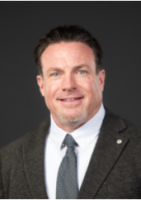
BOONE, Iowa—State Representative Chad Behn provides an updated on the business of the Iowa House. He talks about how busy it’s been with the second funnel coming up. Highlights some of the legislation he’s supported. He also talks a little about the recent numbers from the Revenue Estimating Council. There’s still a focus on property tax limitations but several options to consider.
Transcript
On our program today, we're taking time to visit with state representative Chad Bain. Chad, thanks for taking time to visit with us this week. Well, thanks for having me.
It's been kind of wild down there and it's good to get caught up and kind of figure out if we're sticking to our guns on what we wanted to do down there this year. Well, again, busy and hectic down there. Just kind of, we were talking about just how fast things are going along.
And I mentioned we're a couple of weeks away from the start of the Cubs regular season. I know it's an early start for baseball, but still, man, I mean, it's going to put things in perspective how quick things are moving along.
Well, we officially will have spring in another week and that is going to be your second funnel. So for people that have been wondering what's been happening, I'm guessing it has been very busy getting bills out to the floor, getting bills moved in through committees.
The big thing is you got to get them things that have come over. You need to get them out of your committee and keep moving. Yeah, the Senate, that's where we have an advantage over the Senate.
We have double the numbers and they don't send as much stuff over to us as we send to them. So it's been kind of their busy time trying to decipher what they want to take of ours.
But as far as stuff coming over from the Senate, there's not as much as we thought there was going to be. And so it'll give the Senate a chance to look over the ones they want and see if they want to get them through. All right.
What are some of the things you've been working on most recently, the things that have come up?
Because I'm hearing while one of the committee meetings that was held, I don't know if it was yours or not, but about making it a crime or a arrestable offense for disrupting a church service. That's one of the more recent ones we've got.
Yeah, there's been a lot of stuff like that. We kind of set out on some of the criminals and trying to take a look at the victims and trying to get a balancing act between the two.
What happens a lot of times is criminals are defended, in my opinion, in a little bit of a weird way down there where they kind of forget about the victims and what happened. So we've been we've come out with a lot of bills that are tough on crime.
And we've had a three strikes bill that came out. We had that church bill come out and we've been we've been attacking that side of the victims don't get forgotten.
And I'm amazed at some of the stuff that goes on down there as far as the defense of the perpetrators and not really the victims. I think the victims are the forgotten people a lot of times in some of these crimes.
So that was one of the things you said at the beginning, too, there was going to be a push to do, especially with sentencing, some of the sentencing guidelines and restrictions that were in place. Yeah, we continue with that strong with that.
Again, that's going to be interesting to see what the Senate takes up and that'll have to shake out here in the next little bit. But we sent over what we thought were some good stuff, tough on crime, and we'll see how the Senate handles it. All right.
What's some of the other things you've been working on? Well, I have the Ian Roberts bill come out here yesterday, manage it on the floor. And what it was is if you were lying about your education credentials. And so we had arguments on how stiff of a penalty that should be.
We originally had it as a class B felony, so we were really going to go after it. And we kind of compromised down to a simple misdemeanor for some of those people that made legitimately make mistakes. But this hiring process and people lying on their resumes is a serious problem.
And when this bill came up and as we argued how to handle this bill, I was amazed at no one saying that it didn't happen. Everyone was saying it's very rampant.
And for for those people to get skipped over that process of how much can I lie, if that's what the current resume situation is, whoever's the most dishonest might be the one that gets the job. And that's just not a good thing to have in the state of Iowa.
And so for employers and for employees that get skipped over, we came up with this bill and are going to make sure that if you're lying on your thing, that you have some sort of a penalty. And we ended up landing on a simple misdemeanor.
And so that was kind of fun to run here yesterday. And it got passed pretty easy and a little bit of a bipartisan support as we reduced the penalties. There was a cry to reduce the penalties, quite frankly, from both sides. But we got it. We got it through yesterday.
Again, we'll see how the Senate handled it. Well, it's one of those where it's a yeah. No, I'm not saying people don't embellish, but yeah, they do. And but again, then there's just blatant embellishment, if you will. Yeah. And that in the E.R.
Roberts case, that I think brought light to it. But in all fairness, he did get charged and that he did get what was coming to him. And in that case, and maybe even even deserve more.
But bottom line is those are the types of situations that that call attention to the stuff that's really going on and it allows us to get in there and tighten down the screws a little bit on some of the normal practices. And that's just not a good thing to lie.
And I know embellishment lying. We'll let the courts decide that. And that was part of the reason we reduced the penalty. All right. So you got to you got to do the floor on that. Yeah, we did that Thursday. And then I'll go over the Senate.
But it didn't we compromised on an amendment with both parties. And so it did not gain much problems on the floor. It passed through relatively easy. All right. Okay. Anything else others that you've been looking at working on?
Yeah, I've had a couple of individual ones that have been non-confrontational ones with the specially constructed motorcycles. The DOT currently you have a federally stamped vehicle that just you're allowed to put it on the road.
Kind of no questions because it's federally stamped. Then you have the antique and the homemade cars that the DOT has to come out and expect. And we made a third category that allowed mostly assembled vehicles that the DOT could inspect and put on the road.
So that was just kind of a code reading that was cleaned up and probably ought to be on there anyway. We had I had motocross liability and I had a kickboxing bill that kind of mirrored.
Ten years ago I was doing a jujitsu with Tazr down in Madrid and he was teaching me what to do. And dad was down there at that time and he was Tazr was not happy when they came in and regulated the MMA shows. It was a costly process. And yeah.
And so I took some beatings down there from Tazr and now kickboxing bills and current situation I'm down there in kickboxing shows have taken off and kind of broken off from the show so that they don't have to be regulated.
So he's competing and going against shows where you don't have to have a commission and you don't have to have that three to five thousand dollar cost for that commission. And he's like hey you did this to me back in 2010.
The least you can do is equalize it and make sure that kickboxing is in the same category. These shows ought to be regulated the same way I am. So we we ran a bill down there. She came down and we got it through subcommittee and got it over to the Senate.
So yeah just some of the again a lot of the things in and even last week when I was talking to Senator Green a lot of the things that are coming up and going through people don't realize it's usually pretty quiet pretty low key and you get a lot of bipartisan support and they they pass pretty pretty strongly pretty easily.
Yeah most of that stuff is a situation that's happened. Your constituents come to you and we've got sixty six on the House and so there's a lot of a lot of bills that come through and you question hey do we really disrupt the whole system for a specific case or not.
And so we've got to we've got to equalize that out of our head to make sure it's worth going after. And most of it I almost call cleanup that there's a little hiccup in the system that needs to be adjusted for today's current situation.
You know what funnel week you know here a couple weeks ago and now the Senate and how we're handling it we're obviously putting off the bigger bills to the backside.
And if we the more we get through here and then we spend extra time down here the last couple of weeks we're there till seven eight nine ten o'clock getting all these bills we've had multiple days of more than thirty bills coming through which is a higher number than normal.
But we figured we got to concentrate get those get those through so we can on the backside of here the second funnel week get to some of the higher priority bigger bills.
Well we did get the revenue estimating conference this week which we knew was coming in and usually once that comes out that's when we see and obviously it's always right before that second funnel and that's when we really start to see a lot of budget work that's going to be done.
So a lot of the focus will be on that as you head towards the end but you do have those big policy bills you know you got the property tax obviously and we've touched on that in the past.
I know your last meeting or the last public event you had here on last Monday as a matter of fact I think that was one of the many topics that people had is where are we going what's happening because there's a lot of different things being floated around.
You still have eminent domain. Yes. Yeah those will be those will vacuum up the backside or back half of this will be some tax policy stuff that comes out of ways and means that RAC with their projections and the big beautiful bill coming from Trump and the feds will have to.
It's going to change. There's going to be some some relatively sizable changes that we're going to have to make reactions to. Let's call it that because they've cut some stuff and the big beautiful bill that. Barely affects our budget and we have to we have to react to it.
We're going to have to move some stuff around and change and stuff. So a reaction to that the property tax bill and you're right the pipeline those old those will be the big ones here on the backside. A lot of a lot of.
I know you said before there's going to be some tough choices to make on there because some things are there's not a lot of agreement yet on some areas. Yeah we've got the three categories.
I've got the all three bills summed up in front of me the House version the government version of the Senate bill and. I hate to call it a smorgasbord. We're probably going to go in and pick and choose.
I think I probably mostly like ours and outside of the twenty five thousand dollar or residential exemption. I think that's hit them from both sides. If you're going to cap at two percent you can't really come in there and take away twenty five thousand dollars. Of evaluation.
So we're going to have to take a hard look at that and see what that's really going to do to those taxing stories. We want to we want to rain those in but we don't want to squish them.
And it's going to cause some problems as we look at gas caps will be a big one that we got to fight over for the Senate the Senate's version in the rollbacks out of the Senate's version.
So we definitely are going to have some work to do and we're going to have to get together as a caucus and that's a good thing about pockets and the side work. Caucuses you get every different background under the sun with their with their ability to look at that stuff.
So we'll be able to we'll be able to take a look at that. The big piece for me again was the transparency piece. I just want to make sure whatever taxing authority does what you can visually see in a really easy format who is raising your taxes.
To me that if I could just do that all alone and skip all the rest of it. That's what I would do. I still believe in that local control. I still believe in that local control and voting.
You've got the supervisors you have relatively low or rated one of the lowest in the state and then you've got city and you've got other taxing authorities that are coming across and they're all different.
And so to kind of throw everything in the same bucket I don't really like because you need to be rewarded for your conservative efficient things you're doing inside government and here this is going to come in and hit all of them.
I'm not I'm not truthfully I'm not a big fan of it. I know it's coming when you've got these three laid out and you've got the Democrats wanting to address it.
You know that it's going to be addressed and I'm just going to try and help guide it in in a softer way if we want to call it that.
Yeah well and as we know when you start looking comparing levy rates even you know between the counties we know in Boone County's got a relative probably one of the lower levy rates yet at the same time when you compare it to what they're doing to somebody you know five counties away.
It's not it's not always equitable. I mean you can look at the different rates. It's levy rates are one thing. It's all I always go back to what are they asking for in taxes. Yes. Yeah. No you're exactly right. And that's part of the problem.
If you look at the way property taxes and handled go way back since its inception it's a little bit throw in a dart in the dartboard and it was it was just kind of laid out. It just kind of was what it was.
Obviously it had direction but you never knew how it was going to affect if you were property rich or property poor and and just it's changing all the time because the population change in growth versus recession and smaller towns and how it affects.
So it's just it's so wide open and you know any changes you make are going to have that's going to help some and hurt others. And the last thing you want to do is in the crushing a levy to the point where it can't people can't operate.
So we're going to have to be careful what we do and we'll have to we'll have to make provisions in my opinion to go around the 2 percent cap if you absolutely need to. So we'll take a look at those and we'll pick off the list and we'll try and make all of these bills even better.
But less is more in my case as I'll be fighting for to make sure that this gets guided in. But yet coming from a next supervisor I want to make sure that local control still has input.
And that's well we always encourage that part but again to have that's one of those things there are well a perfect example would be and I know it's on the Senate side there were a lot of it's going on.
But that matter with the township trustees and I know you've heard about that but. Oh yeah. Yeah I guess you got a your full on that one. Yeah. Yeah. That elected officials. Both of those are probably the biggest heartburn that I've heard the 25000 exemption.
I think that'll take a minute to get to people. But if they figure that out that probably be the biggest heartburn. But the election and then the township trustees are the two issues that I've heard about the most.
There's the efficiencies that will be lost if we turn that over to the supervisors because there's volunteer work going into it. I'm not sure now is a good time to do it. If you're going to if you're going to exchange something that's working and they're going to argue it's not.
But if you're going to change something that's getting along with say and turning it over to the supervisors they're going to hire it out. There's no way they can go around to that many cemeteries and take care of them. So they're going to hire it out.
It's going to be put right back on the taxpayer. So I don't think now is a good time to do that. I can see the trajectory towards needing to do something. But I don't think we're there yet. And I really don't want that to be another piece in this property tax bill.
Well like so many things the challenge is always finding younger people to start stepping in and doing those things. So yeah the fire departments the volunteer fire departments the stuff like that were generationally.
They're just looked at differently and there's been different callings to do stuff like that and volunteer work. We're getting to the point where that's getting less and less. And again I don't think we're there. But I think it's something we need to take a look at in the future.
I was going to ask you because I know one you thought was kind of interesting starting with community colleges doing four year degrees. We've got at least a proposal floated out there to see maybe try to do some trial work on that.
Well is that something you're still following along with. Yeah we got that pass out of the house. So I was super happy that was contentious and it took multiple times to sit down. I think an hour plus on the issue more than once.
And that was tough because you've got the private colleges and you've got different things. But I've had a lot of people a lot of constituents call me and say hey I'm getting past that for out of state students. And you're sitting here like why are we why are we focusing on that.
And we know the almighty dollar in this particular case they're getting out of state tuition. And so they're they're starting to educate out of state kids for monetary purposes. Well what are those kids that are here local.
We've got someone here in Boone County that is trying to get into vet school. And so to allow two year colleges to compete for those students.
I think it'll be a wake up call in the four year the regents in the private schools to say hey the private school tuition has gotten relatively out of control. And we've got the regents who are skipping over Iowa students to educate out of state students.
And so I this one was kind of an easy one for me to say hey we've got colleges in the state that are willing to educate our kids at a reasonable price. And take Iowa kids.
So that's the way I looked at that and I I was surprised at how long it took to get that bill wrangled up and how long our discussion points were. I didn't realize the private colleges in the region had such an influence. But this one was an easy one for me.
I think it'll be great. I think it'll benefit the students. I think it's going to lower all costs college. And it's going to favor the Iowa student. I have a friend that's got nursing student over at Iowa State and she get rejected for out of state kids.
And you're sitting like what in the world is going on. So I think we have issues and I think it allows us to hone in and get after the regents and say hey guys take Iowa students and fight for Iowa students. So that one was that one was an easy one.
All right going forward towards the second funnel here and the next week a lot of the same committee work and things like that moving things out is. I mean you don't have again you don't have the volume they have on the Senate side.
Yeah this slows down actually for us or our busy time was was the last three weeks and before because we had a lot of bills coming through sub. But last three weeks got concentrated on the floor for debate and we've been hammering that out big time.
And and so now for us we're actually going to take a break but we're going to be able to slow down look at what the Senate got over to us. It won't be as many and we'll get some bills out from the Senate to give us bargaining pieces to make sure that we get what we want.
They get what they want and that's just the way things work down there. So we'll we'll be focused on that. We just won't have the volume so it'll allow us to slow down a little bit and truth be told sometimes slowing down and getting through some of that stuff is better anyway.
I have a tendency to think we probably pass too many things. It's something I fight against. There are a lot of times I'm I'm allow about anything through sub and allow most things through committee.
But if I get the opportunity I'll kill a bill and committee that will never see the floor and I don't do that very often. But there's been five six eight of those this year that I'm like no no no no we don't.
And and if they end up in a committee vote I'll even let those out because I think the whole caucus ought to take a look at them. But the bottom line is it's that's been something I'm starting to get a little bit of a reputation for killing stuff off down there that.
We just don't need to be looked at. Yeah we just don't need to be doing this right now huh. One of those things. Yeah and some of them end up in in the category that we've railed against something before and here we're in charge and now we're thinking about doing it.
And I'm like no no no we got to keep it both ways.
We can't we got to look at things philosophically and if it triggers that that gut reaction those spidey symptoms where you're like whoa whoa whoa wait a minute we've been down the show before we were just on the other side of the fence.
I just like that we've got to keep true to our principles and and so I fight off those ones that those ones that in my opinion clearly break those principles and have been have been pretty happy to get get some of those killed off.
All right hey I appreciate you taking time visiting with us this week letting us know what's been going on and we'll keep in touch with you and have you on and keep up updated with everything that's happening on the house side. Thanks for visiting with us.
Sounds good I really appreciate it you take care and we'll be in touch.
About the Author